
Footless Heaven, 2025, Oil on Board, 20 x 25 cm

Tending To Chaos, 2025, Oil on Board, 20 x 25 cm
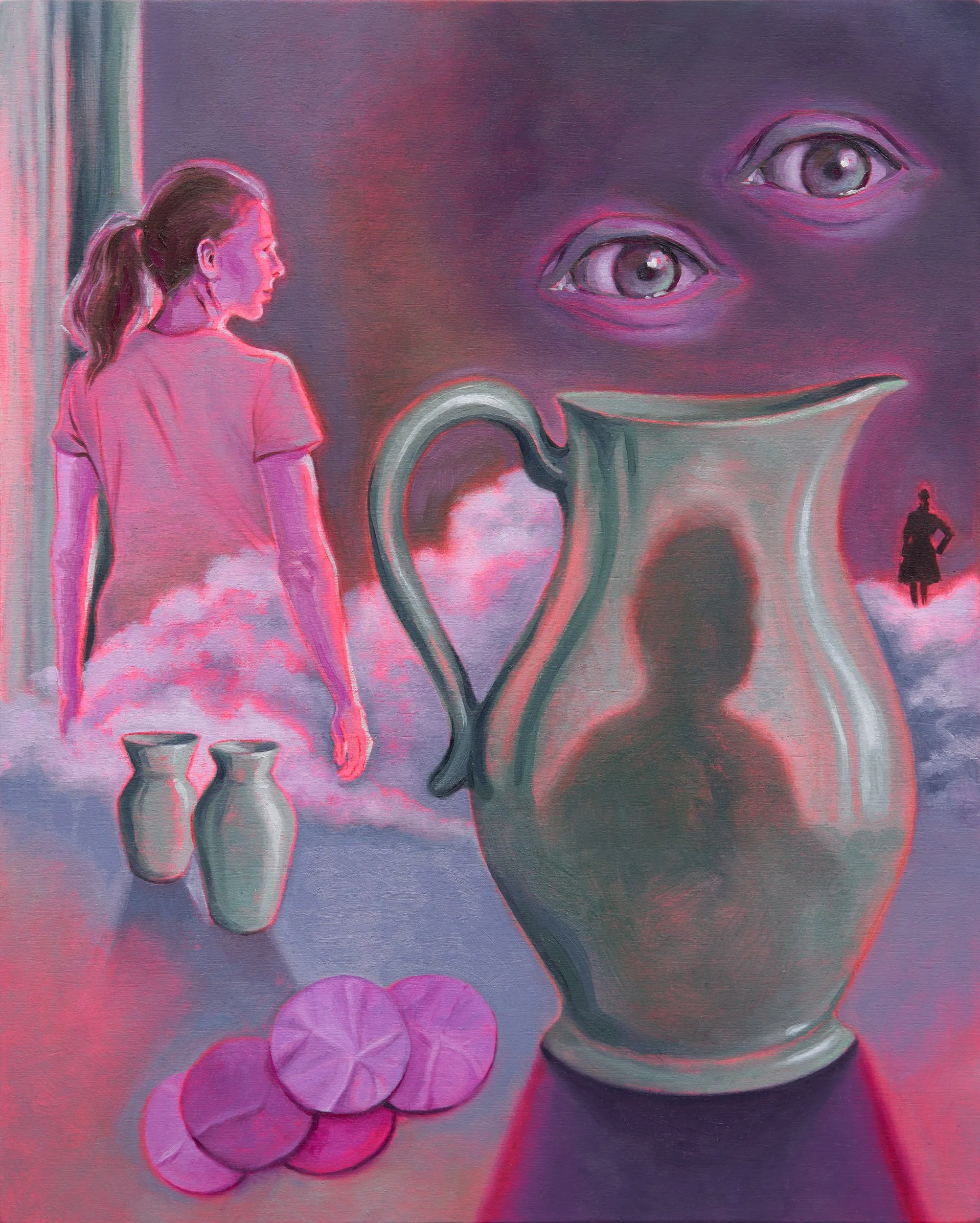
The Watcher, 2025, Oil on Board, 20 x 25 cm
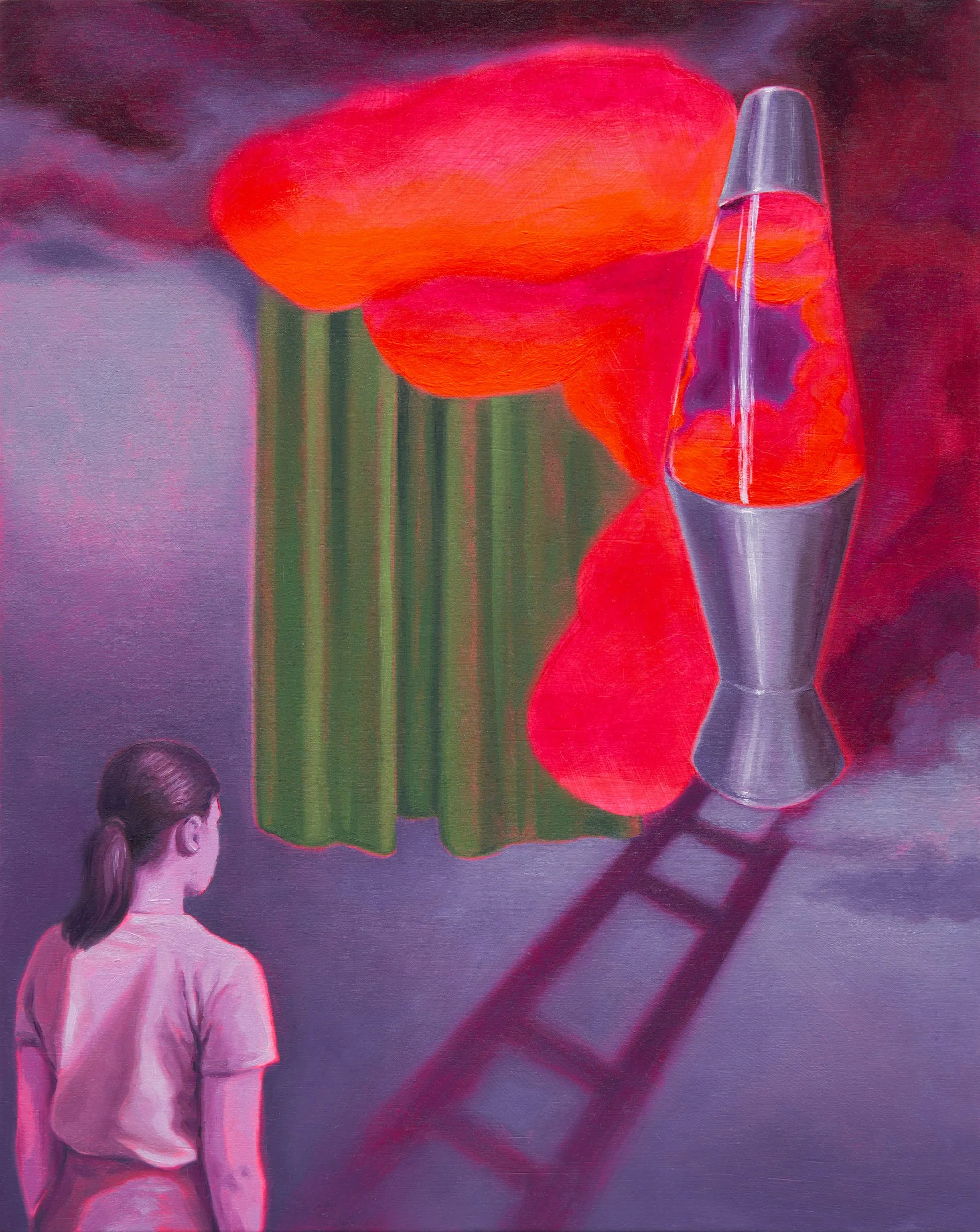
Missing Rung, 2025, Oil on Board, 20 x 25 cm
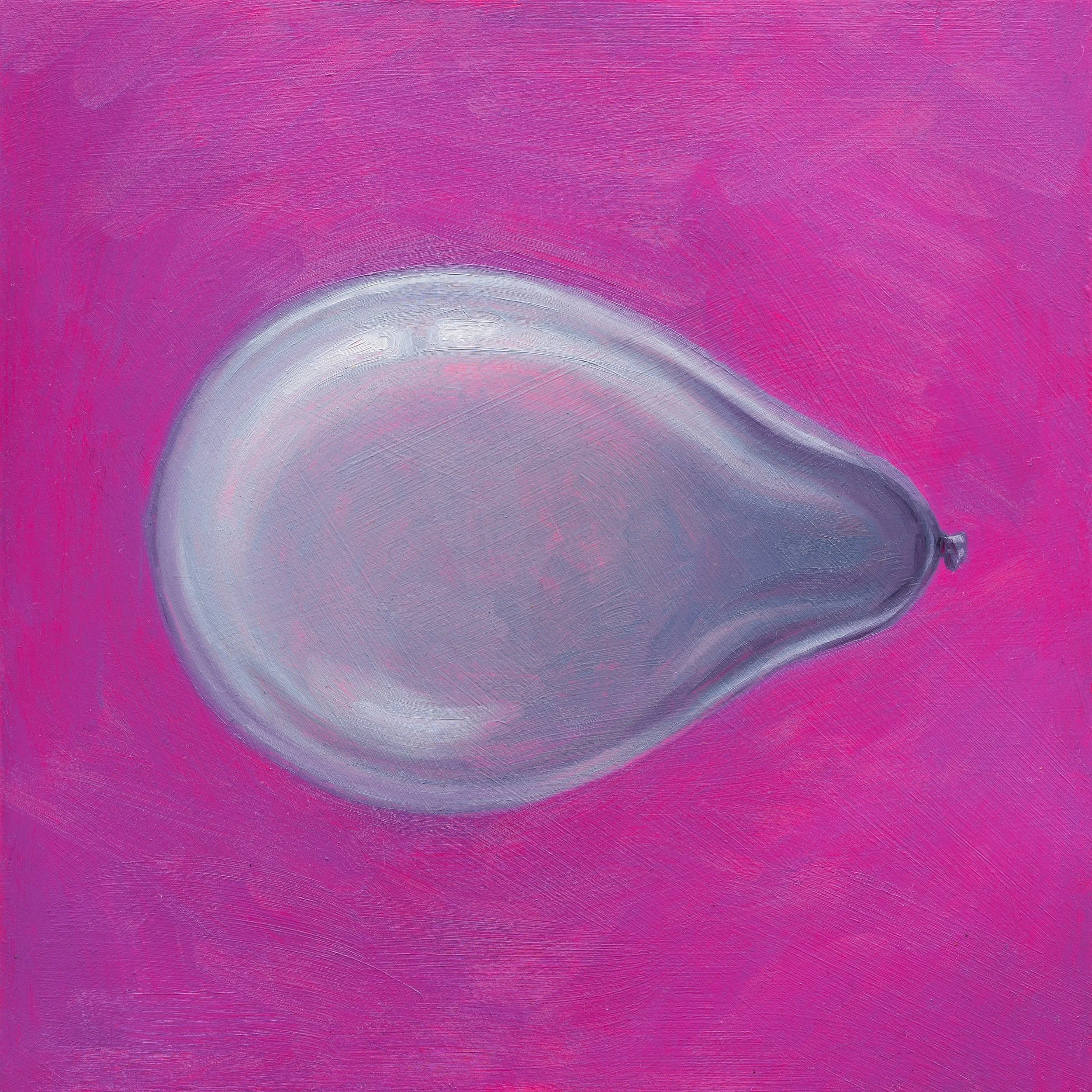
Held Breath 1, 2025, Oil on Board, 15 x 15 cm
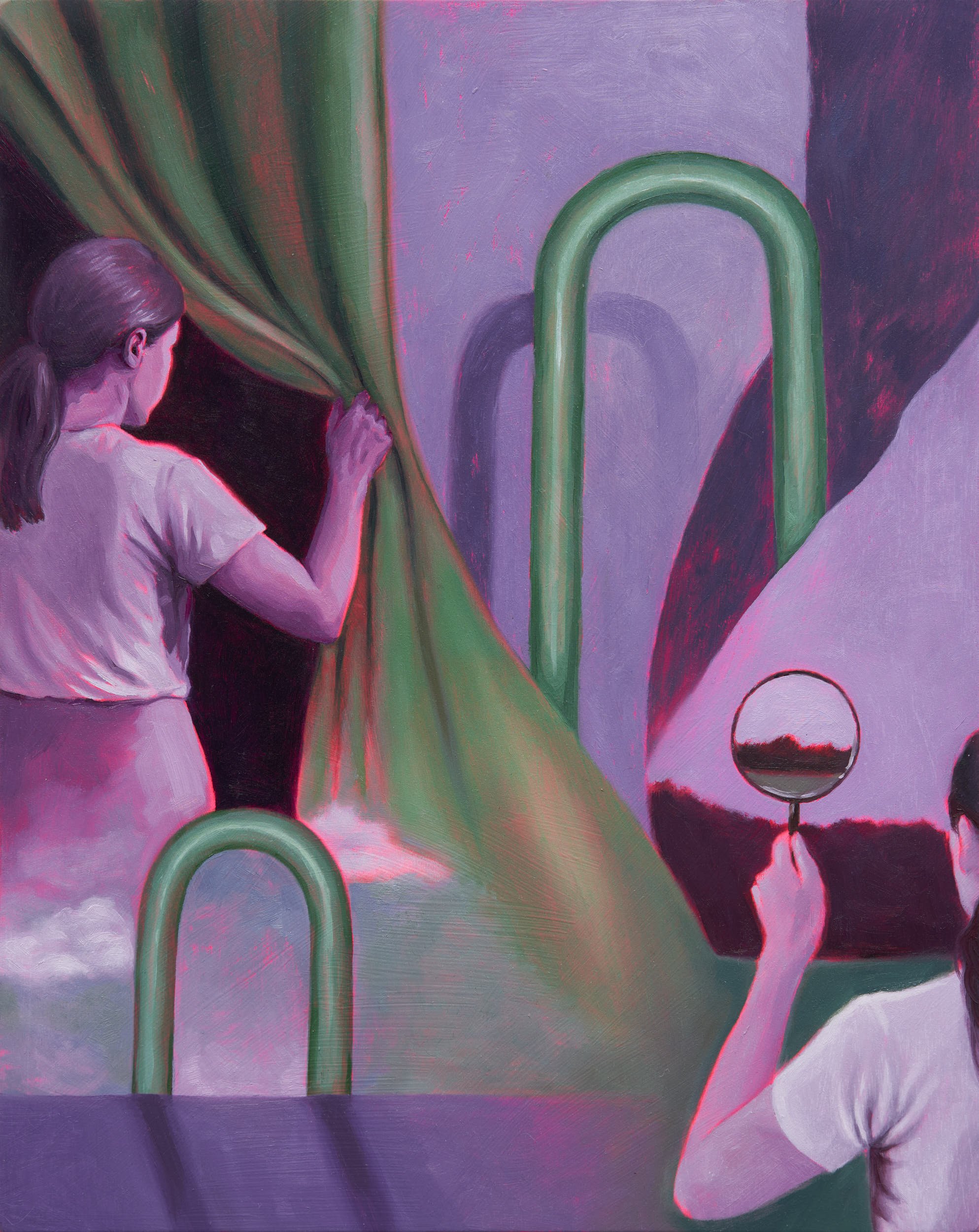
The Vanishing Middle, 2025, Oil on Board, 20 x 25 cm
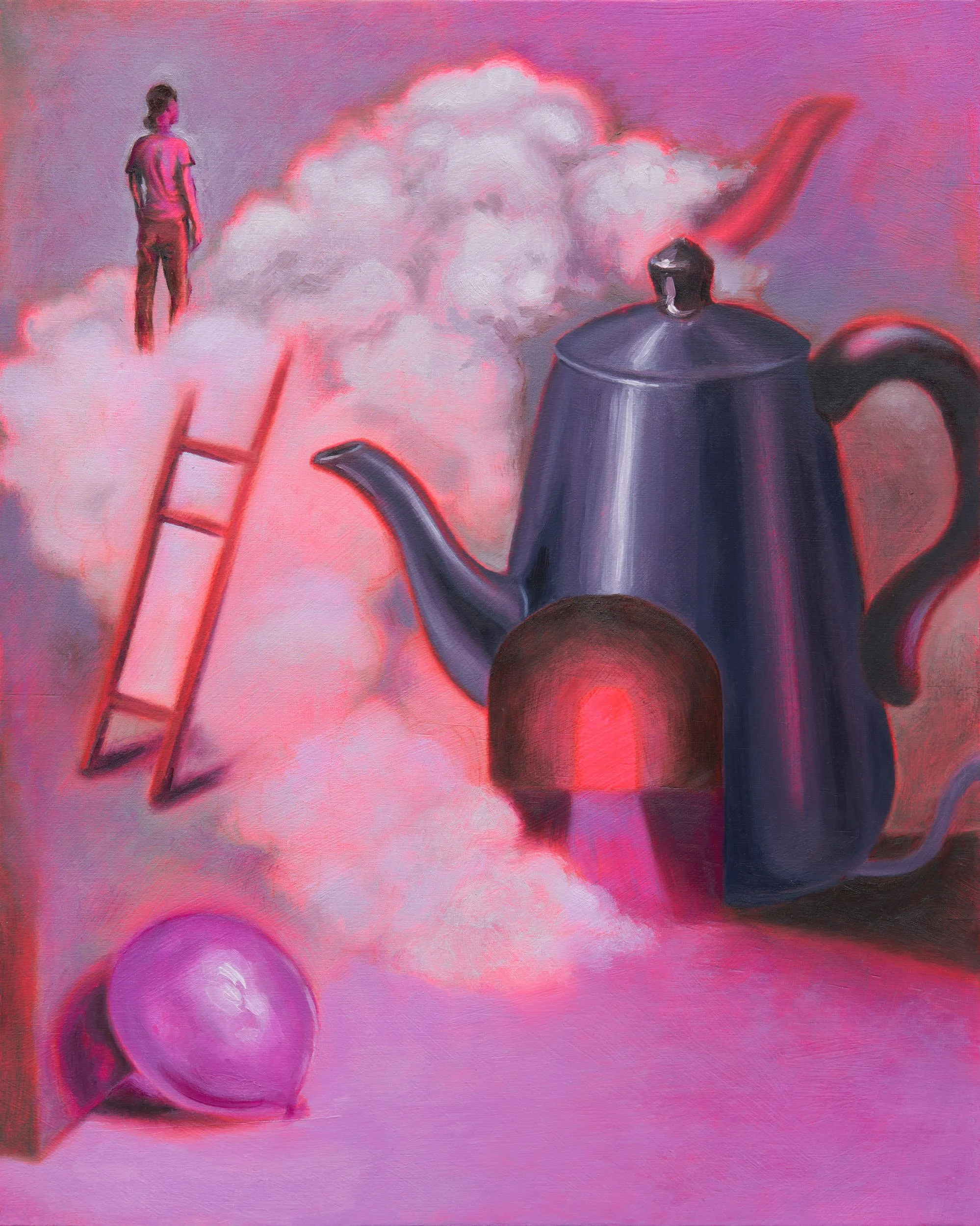
Pressure Vessel, 2025, Oil on Board, 20 x 25 cm

The Doubt That Undoes, 2025, Oil on Board, 20 x 25 cm
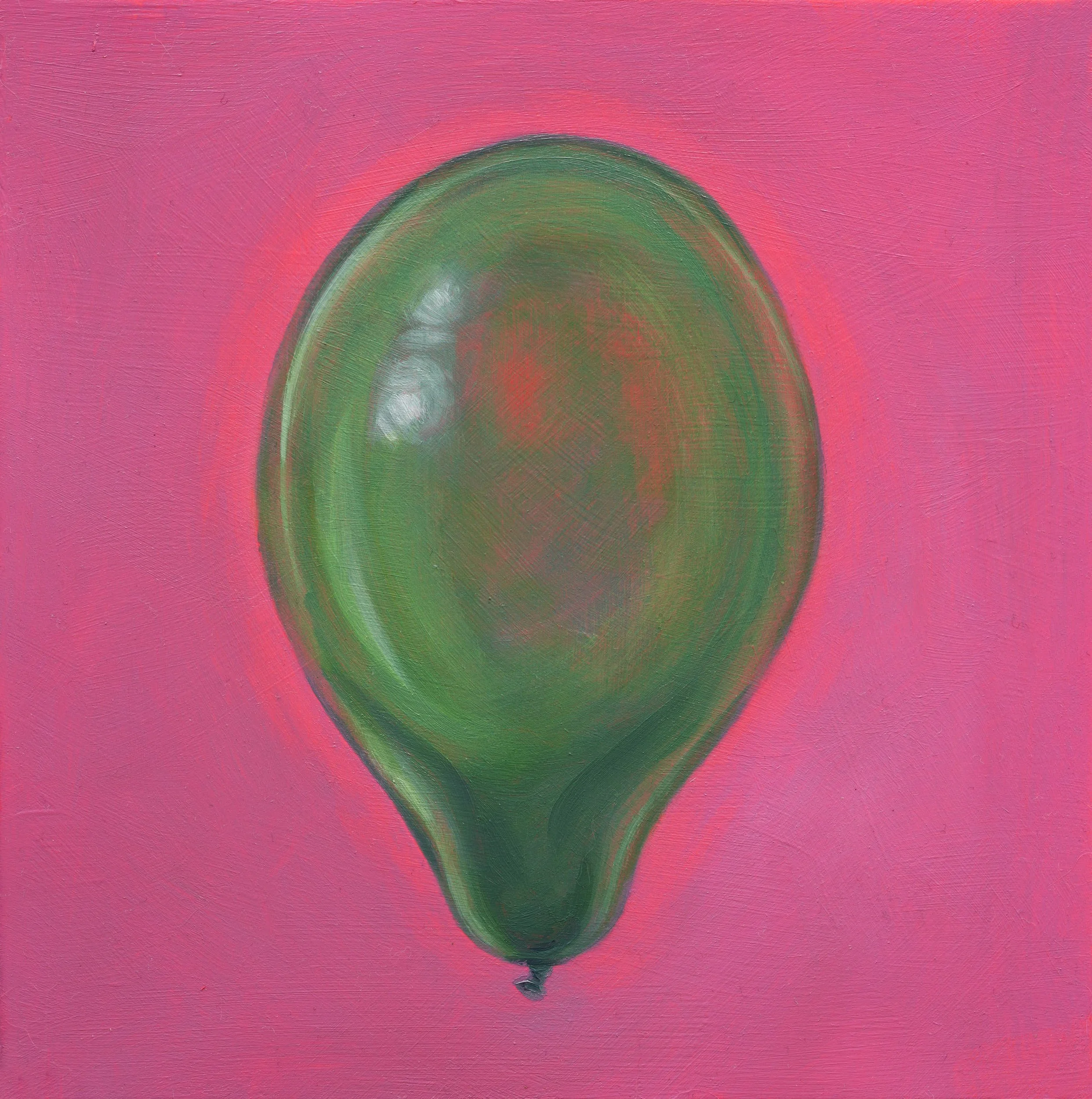
Held Breath 2, 2025, Oil on Board, 15 x 15 cm
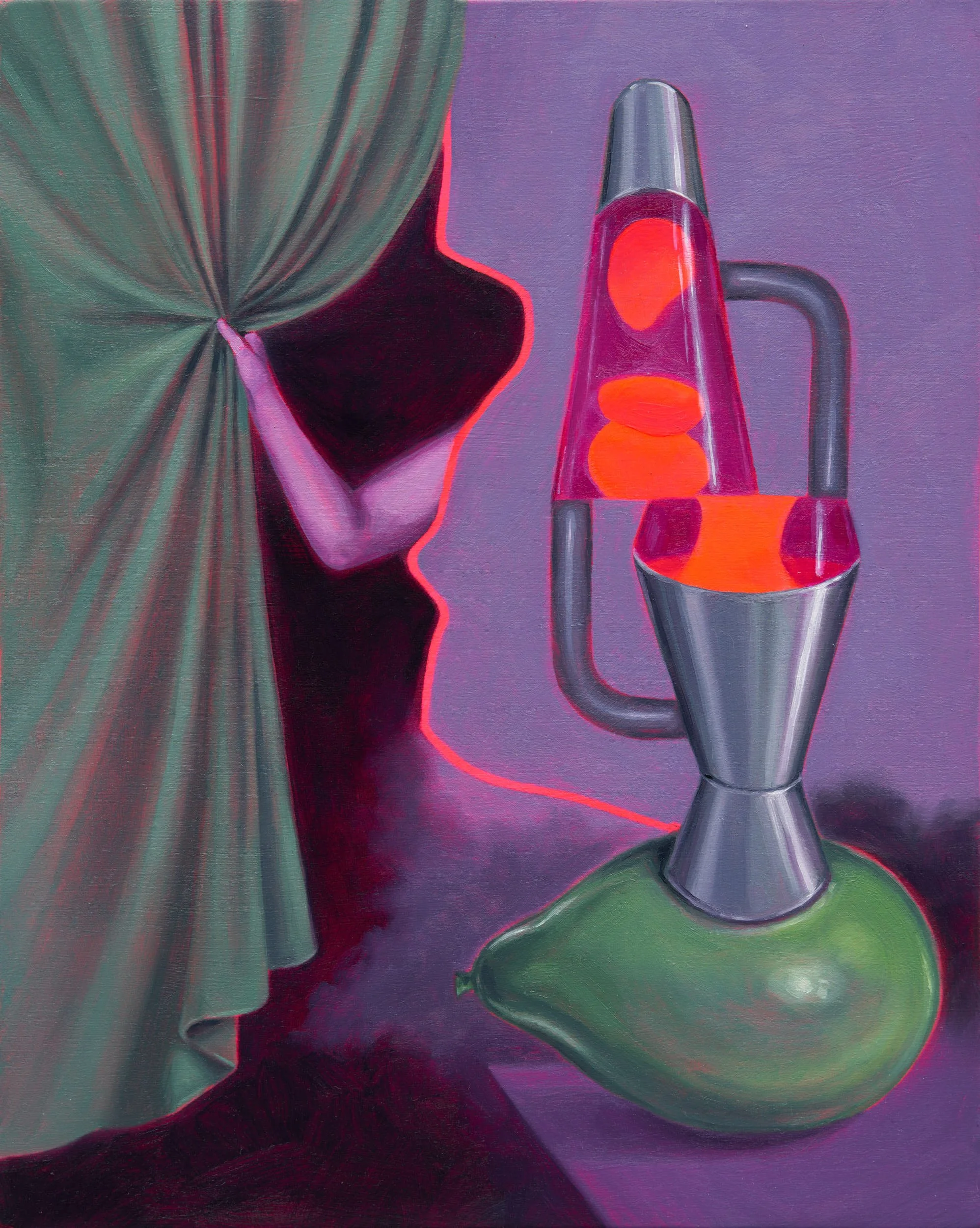
The Gap Between Knowing and Doing, 2025, Oil on Board, 20 x 25 cm
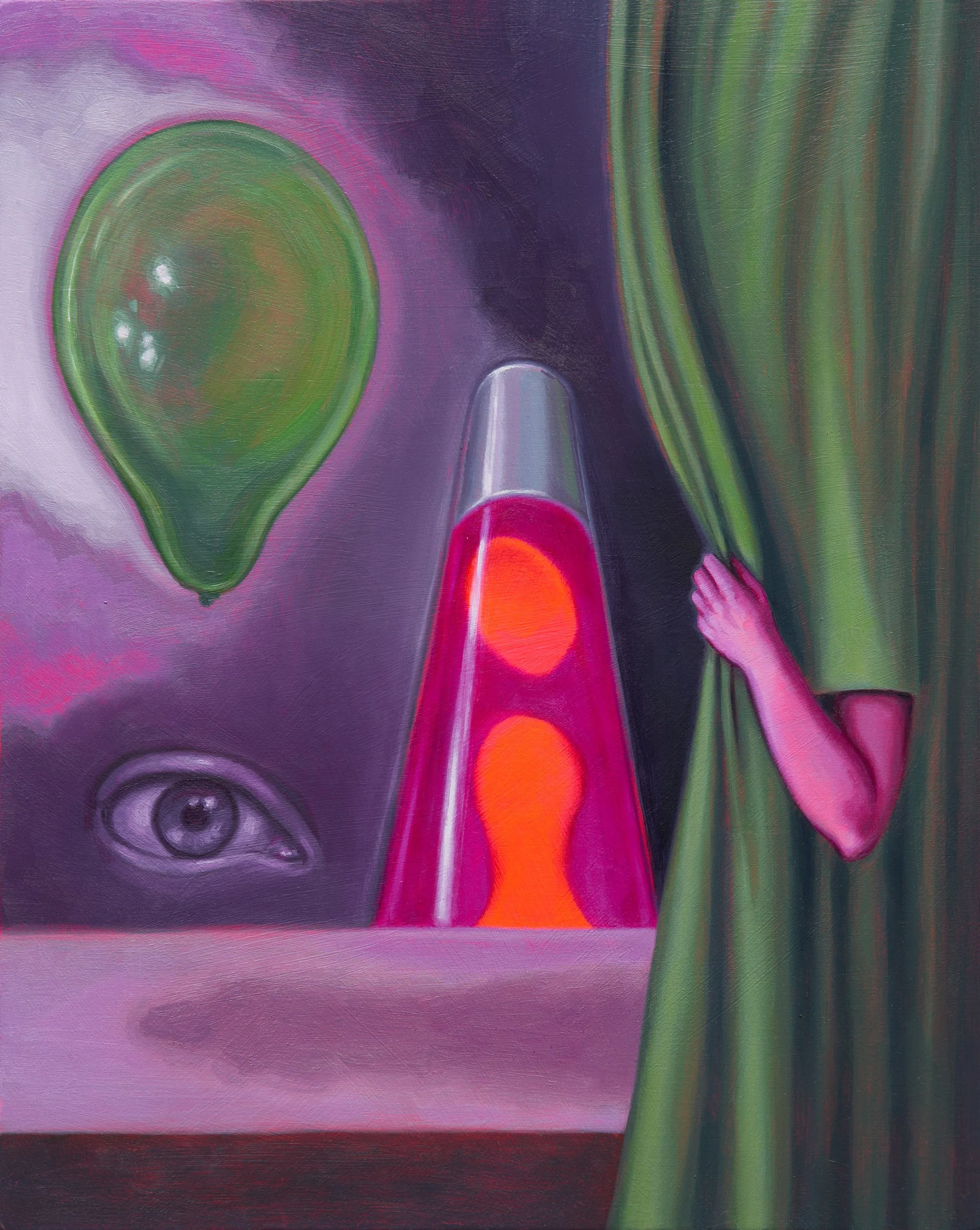
Stepping Into The In Between, 2025, Oil on Board, 20 x 25 cm

Remembering Instructions For Trusting A Balloon, 2025, Oil on Board, 20 x 25 cm
Catalogue Essay
Written by Ida Sophia, 2025
In The Balloon That Held its Breath, Ruby Chew presents a new series of symbolically saturated paintings that operate as paradoxical vessels: containers for overflow, rupture, and emotional charge. These compositions form not a narrative, but a personal lexicon for investigating late-diagnosed neurodivergence. Chew’s system - in which objects such as ladders missing rungs, lava lamps and balloons reoccur - become representatives for hyper aware states of fragility, contradiction, doubt and a constant oscillation between trust and fear. Quietly humorous and leaning toward the bizarre, Chew manages to open a serious dialogue with heavy lightness. Employing a mesmerising colour palette akin to the relaxed feeling of gazing into the gloopy depths of a lava lamp, Chew creates a similar atmosphere of calm self reflection. Of this experience Chew states:
“The lava lamp has become an important symbol in my work - a calming tool, and a reminder that neurodivergence has its own rhythm. Its shifting forms felt like a fitting metaphor for people like me, who didn’t “look” neurodivergent and went undiagnosed for most of their lives. Getting a late diagnosis gave urgency to the work, but also helped me reshape my process to better support how I think and make. Creating symbols, metaphors and working responsively has helped me process and understand myself - a journey that’s still unfolding. These kinds of stories might not be loud, but they hold weight and contribute to a growing conversation about valuing neurodivergent stories and perspectives.”
Rather than beginning with the act of painting, Chew began by writing a symbolic dictionary to define and declare the nature of her own (and shared) neurodivergent experience. Each motif tells of the complexity of this experience, rendering states of masking, time distortion, cognitive dissonance and sensory saturation not as pathology, but as a lived experience. Devised as a living document, it serves as a tool that combats memory issues, a symptom of Chew’s AuDHD. Within her dictionary, ideas are caught before they disappear and from there, they grow into the visual language we see today. Chew expresses that “Over time, that tool became central to how I work, both as a practical support and as a conceptual foundation. Getting my diagnosis helped me understand why this way of working feels so necessary.” A crucial discovery, it has caused a poignant shift in how Chew is able to conceive and form her work.
In uncanny and invented settings, Chew presents her experiences, such as time, as distorted and untrustworthy. Her figures navigate surreal and contradictory terrains where coherence is provisional and multiplicity of states is normal. In ‘Between Fear and Forgetting’ the composition is abruptly met with an evaporation - as if the work had a sudden memory lapse - leaving only swathes of dense darkness. Beside this lapse, a figure balances precariously atop a balloon illustrating the disconcerting transitions between fear and trust. Balloons in Chew’s work symbolise sound sensitivity and the anxiety of environmental unpredictability - their potential to pop reflects the ever-present hum of low-level tension that comes with being at the mercy of sudden, sensory disruption.
Across her paintings, motifs of containment and fragility are not simply diagnostic; they are reclamatory. Resisting literal interpretation, Chew’s works present visual ideas as shared inquiry for understanding the neurodivergent experience. Crucially, these paintings do not seek to explain neurodivergence, but to hold it - tenderly, curiously, and without didacticism. In doing so, she carves out a visual space in which non-linearity and overwhelm are not only acknowledged, but given aesthetic and conceptual dignity. These are not just paintings but a timely act of symbolic navigation, quietly revolting the known way of atypical conditions.